
What's the Secret Message Behind 'E' on Some Car Gear Shifts?
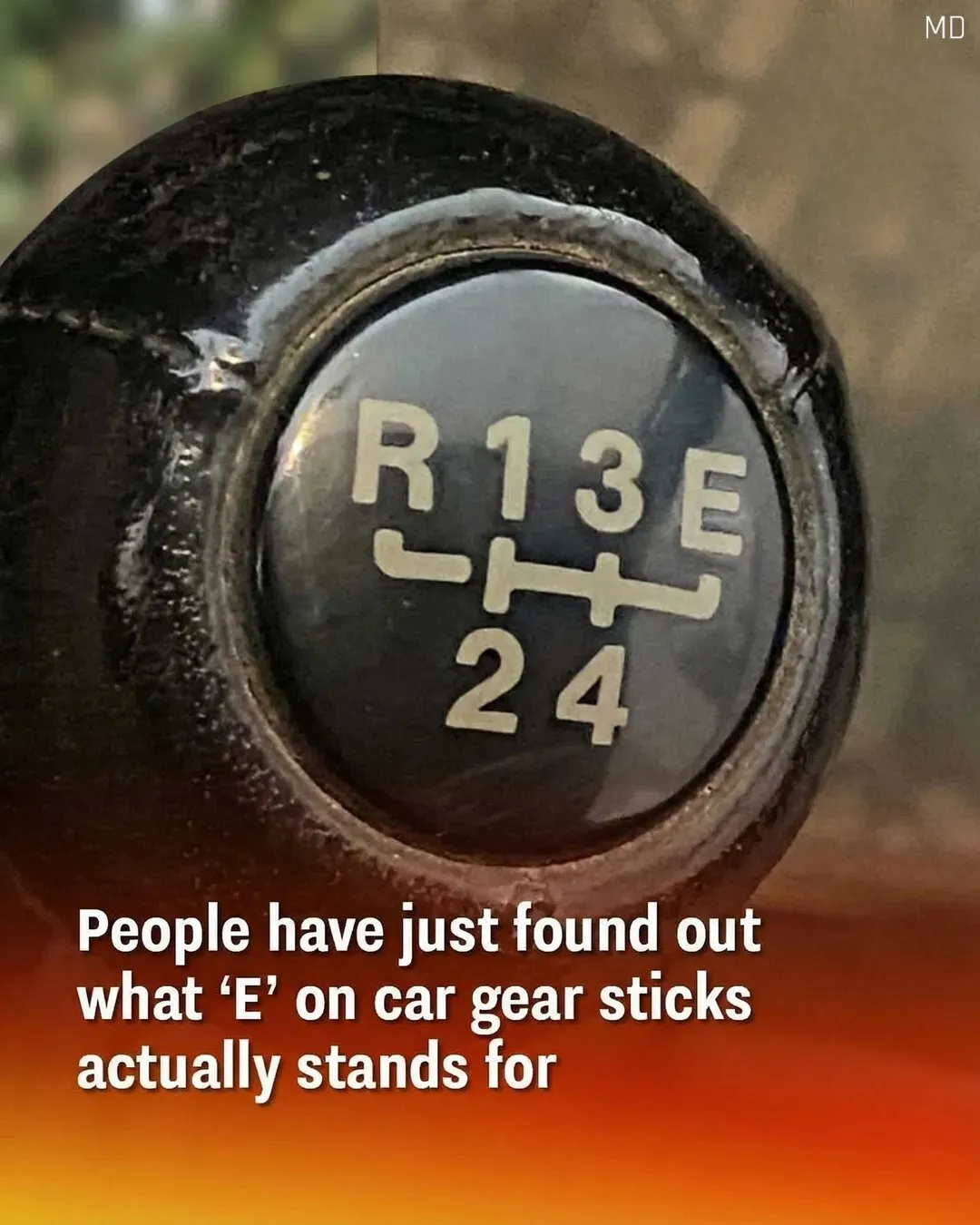
For years, drivers have been accustomed to seeing specific letters and numbers on their gear shifts. Manual cars feature numbered gears with "R" for reverse, while automatic cars commonly display “P,” “N,” “D,” and “R” for Park, Neutral, Drive, and Reverse. Some automatics may even include an “L” for Low gear. Recently, older vehicles bearing the letter “E” caught the attention of motorists, sparking curiosity, especially among younger drivers unfamiliar with this setting.
The "E" Setting Explained
Automotive content creator Supercar Blondie triggered a discussion by asking followers about the purpose of the mysterious “E.” Experienced drivers revealed that “E” stands for “Economy.” In older models, this mode was intended to enhance fuel efficiency by adjusting engine performance to lower revolutions per minute (RPM) and optimize shifting for reduced fuel consumption, especially during steady cruising.
As vehicle technology advanced, the necessity for a separate “Economy” mode diminished. Improvements in engine efficiency, fuel injection systems, aerodynamics, and computer-controlled transmissions eliminated the need for drivers to manually select a fuel-saving gear. Modern cars can now balance power and efficiency without requiring a specific setting, integrating efficiency into the vehicle’s design.
The Evolution of the "E" in Automotive Technology
Today, the letter “E” has gained new relevance in the automotive industry, now associated with electric vehicles. Unlike traditional manual transmissions, electric cars operate without multi-speed gearboxes, utilizing simplified controls like digital selectors or compact switches. As the industry progresses towards cleaner and more advanced transportation, the driving experience continues to evolve, highlighting how automotive innovation has transformed over time.